
So, you’ve just received your DNA results from 23andMe, Ancestry etc and you’ve discovered that you are from the Igbo ethnic group in Nigeria – where do you begin?
Well, first of all, congratulations and welcome! Uncovering your ancestry is an exciting revelation that opens the door to a rich cultural heritage. Over the years, we’ve received messages from various individuals with questions about where to start, and we understand it can be challenging.
Whether you are Black American, Afro-Caribbean, Afro-Latino, or anyone eager to connect with your Igbo roots, we’ve written this as a very basic guide to help you embark on a meaningful journey of self-discovery and cultural exploration. It’s also important to remember that whatever culture you come from is beautiful and worthwhile in its own right, and learning about this aspect of your ancestry is just an addition to your eclectic makeup!
Step One: Understanding your goals
Before delving into the intricacies of Igbo culture, it’s essential to clarify your goals. For example, are you seeking deep immersion into the community, personal understanding, or a combination of both? Identifying your objectives will help shape your journey and better prepare you. It’s also essential to let go of preconceived ideas and approach it with as open a mind as possible.
Step Two: Learning for self-discovery
Who are “the Igbos”?
Native to present-day southeastern Nigeria, the Igbo ethnic group makes up approximately 15% of the country’s total population, ranging from around 34 to 40+ million in 2023. Often overlooked is the fact that Igbo constitutes a meta-ethnicity, signifying a collective identity that spans multiple sub-groups within the broader Igbo community. In short, Igbo people are not a single, homogeneous ethnic group but encompass diverse sub-groups with shared cultural elements.
Geographical distribution and language
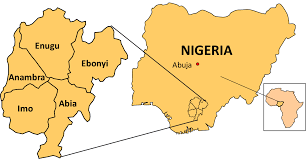
Similar to the USA, Nigeria is divided into different states; however, many of the states were created based on ethnicity. In the case of the Igbo people, their indigenous homeland spans five states (Abia, Anambra, Ebonyi, Enugu, and Imo), and in these states, over 90% of the population identifies as Igbo. Additionally, neighbouring states such as Delta and Rivers have significant native Igbo populations.
The Igbo language
The Igbo language is a tonal Niger-Congo language and the diversity of Igbo people is reflected in the language giving rise to various dialects. The most commonly taught Igbo dialect is what is referred to as ‘Central Igbo’ or Igbo Izugbe. Another main dialect is Northern/Anambra Igbo, widely spoken in places like Onitsha and Nnewi. Notably, native speakers of the two most common dialects can almost always understand each other.
Historical background
It is generally believed that the Igbo, like many West Africans, migrated from East Africa to West Africa tens of thousands of years ago but this is not adequately substantiated. The earliest archaeological findings referencing Igbo people in the Nigerian area date back around 8000 BC. For a deeper historical understanding, Professor John N. Oriji’s book, “Political Organization in Nigeria Since the Late Stone Age: A History of the Igbo People,” offers valuable insights.
Traditional and current belief system
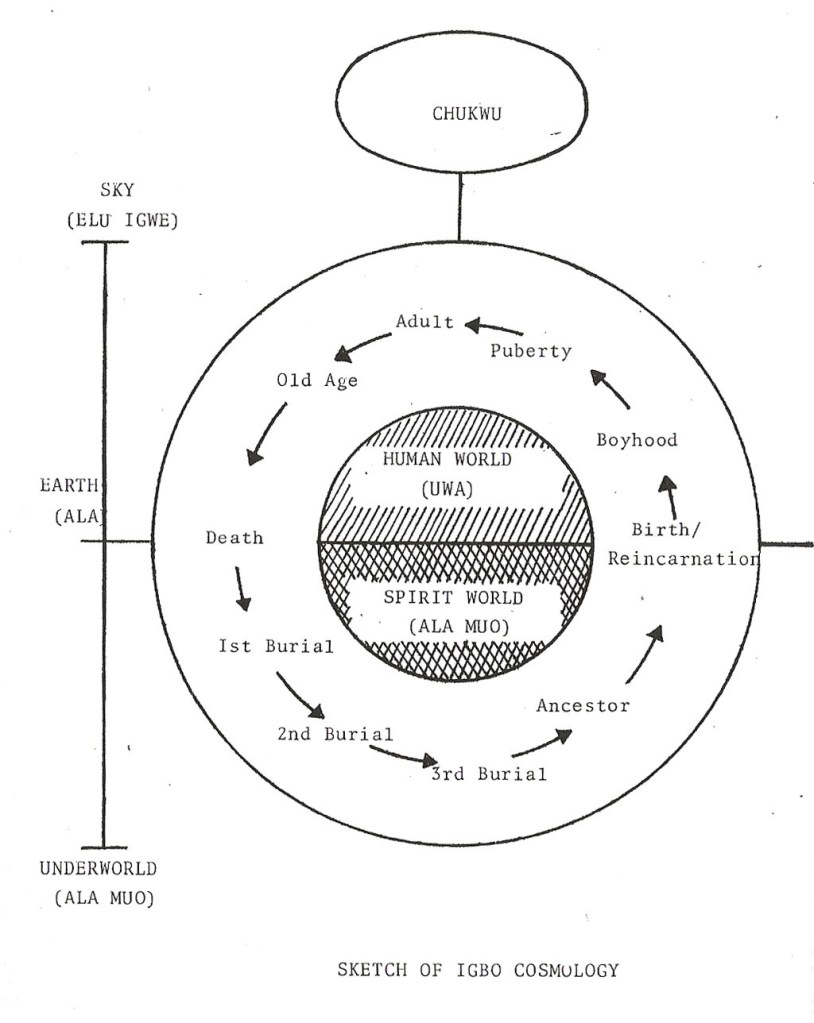
The belief system of the Igbo people, referred to as ‘Odinani’, ‘Odinala,’ or ‘Omenala’ etc. encompasses a creative being or deity, often called ‘Chukwu’ or “Chineke.”, an earth deity “Ala” or “Ani” (amongst other variations) and the concept of “Chi” a personal life force. While Igbo cosmology is rich, since the colonial era, the overwhelming majority of Igbo people identify as Christian. While colonial influences have led to a shift, understanding the cosmology provides valuable context to the Igbo worldview and psyche. To find out more about ancient Igbo cosmology, check out the Medicine Shell.
Music, fashion, and arts
Igbo culture proudly showcases a vibrant musical legacy, highlighted by traditional instruments like the oja (flute) and ogene (gong), which play a pivotal role in lively masquerade dances. Additionally, the Igbo people are celebrated for their distinctive traditional attire, featuring the iconic Isi Agụ fabric, Akwete, and traditional art forms like Uli.

Food
Igbo people are well known for their variety of delicious soups and yam-based dishes. To find out more about Igbo food, click here.
Culture and characteristics
Igbo people are known for their strong will, personal determination, hard work, family orientation, resilience, enterprising nature and enthusiasm for making money.
The Nigeria-Biafra War and genocide
The Biafran War (1967-1970) was a significant chapter in Igbo history. Igbo people formed the largest group of Biafra, the Eastern region of Nigeria which tried to succeed from the country. The Biafra side lost and experienced a devastating genocide taking an estimated 2 million lives. Although they were able to recover fairly quickly, this left a huge impact on the community and psyche of Igbo people. To read more about it, check out “There Was Once a Country” by Chinua Achebe.
Legacy and diaspora
During the slave trade, Igbo people were taken in large numbers to the Americas, transported primarily from the ports of Bonny and Calabar to the Americas, particularly Virginia. They were also taken in large numbers to Caribbean Islands like Barbados, Belize, and Jamaica.
Igbo people are known as ambitious tradespeople, and there are large numbers of people of Igbo descent across the world, namely in America, the UK, Canada, Ireland, Germany, Italy, and other African countries like Gabon, Cameroon, Equatorial Guinea, and Ghana.
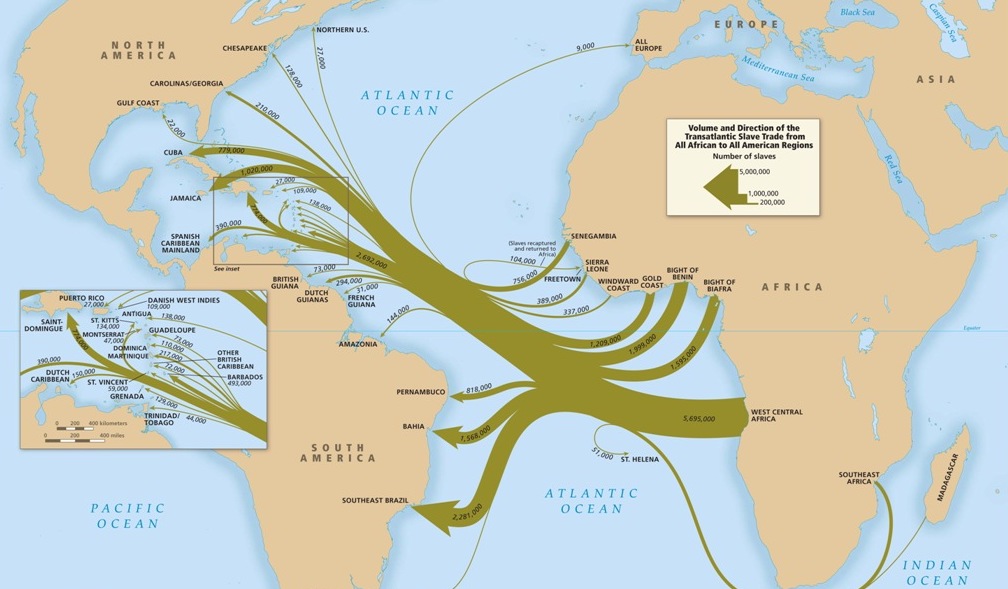
Map: slavevoyages.org
Tracing your roots
If you’re interested in your genealogy, embarking on a journey to trace your Igbo lineage might be worthwhile. To do this, try to investigate the initial points of entry of your ancestors into the Americas, and seek out any connections that may link them back to specific regions in Igboland.
Essential reading
For an entry point into Igbo culture, check out our book “An Illustrated Introduction to Igbo Culture,” which gives a basic overview of customs like the breaking of the kola nut and the significance of the New Yam Festival (Iriji).
If you’d like to do some reading, we recommend books listed here.
We’ve also written many articles on Igbo clothing and traditional wear, as well as resources for learning the Igbo language. Check them out here.
Step Three: Exploring Igbo culture – Steps to integration
So, after laying the groundwork with the steps mentioned above, you may want to find out how to integrate into an Igbo society near you.
A great starting point is to dive into learning the Igbo language and making Igbo friends. It’s important to note that there might be differences in cultural understandings and perspectives between diaspora-raised Igbo people and those born and raised in Nigeria. However there are benefits to getting to know both kinds.
Learn the language
When it comes to learning Igbo, approach it with an open mind. Acknowledge that it’s very different from English, and that consistency is key. Consider simulated immersion, getting a tutor, or connecting with a native speaker. Check out this article for the best ways to learn Igbo quickly.
Attend community events
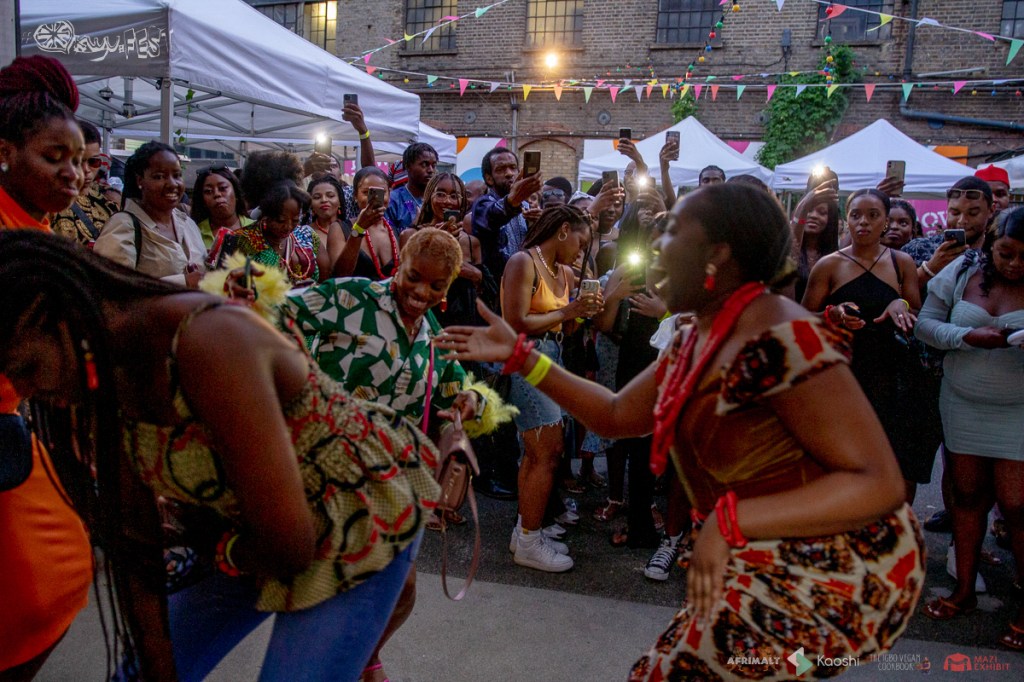
Without physically going to Igboland, the key to immersing yourself in Igbo culture is to attend community meetings, weddings, and other cultural events. Start by searching for Igbo community groups in your area and send them a sincere message explaining your intentions. Most people will be delighted to welcome you and offer guidance. Remember to be respectful, ask questions, and approach the experience with curiosity and respect. Respect, especially towards elders, is highly valued in most African cultures.
Building genuine connections will enrich your cultural exploration, opening doors to understanding and increasing your chances of forming authentic friendships and receiving invitations to a variety of functions.
Travelling to Igboland and getting an Igbo name
There have been cases where some people have travelled to Nigeria to receive an Igbo name and to experience the culture first hand. The best way to go about finding out how to do this is by connecting with the Igbo people closest to you.
If you start this journey with an open heart and a genuine willingness to learn, you’ll discover the all richness of Igbo heritage opening up to you.
Once again, we’re thrilled that you’ve decided to take these steps! If you have any questions, feel free to reach out to us here.

