
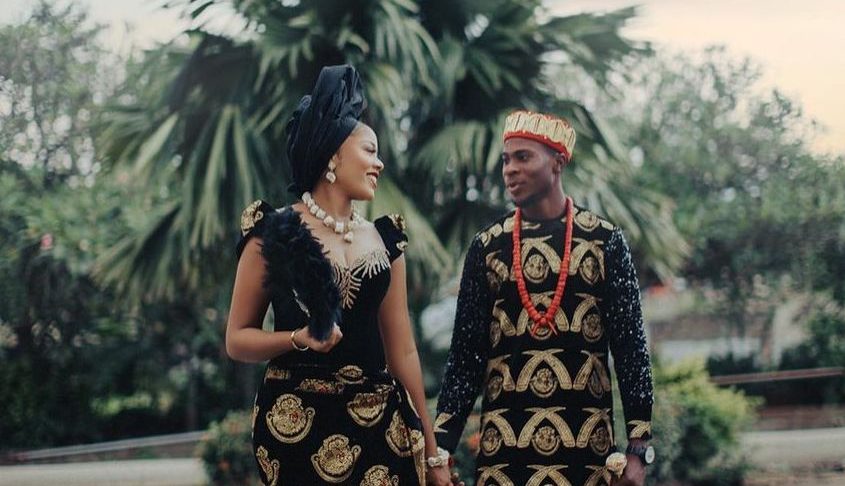
Greetings in Igboland are more than just words exchanged in passing; they hold deep cultural significance and are a key part of social interactions. In some parts of Igboland, people are greeted according to their title or position in society. However, the following greetings can be used across the region:
- Ndewo
(Nnọọ)
Ndewo is a versatile greeting in Igbo used for welcoming and acknowledging someone. It can be used at any time of the day, making it a go-to greeting for many situations. While Ndewo means “hello,” Nnọọ means “welcome” in English. These greetings show respect and hospitality and are often used to welcome someone to a place or event.
Usage:
- When you meet someone for the first time.
- Welcoming guests to your home or event.
Example:
- Call: Ndewo! (Hello!)
- Response: Ndewo! (Hi!)
- Kedu?
Kedu? is a simple and direct way to ask “How are you?” in Igbo. It is a common greeting that shows interest in the well-being of the person you are speaking to. This greeting fosters a sense of community and care for one another. Usually, as a response to this greeting, a person is expected to answer and then return the greeting as a show of goodwill. Kedu can be used as a stand-alone greeting or further extended to inquire specifically about someone’s well-being.
Usage:
- In casual conversations with friends, family, or acquaintances.
- As an ice-breaker in social situations.
Example:
- Call: Kedu? (How are you?)
- Response: Adị m mma. Kedu maka gị? (I am fine. How are you?)
- Call: Kedu ka ndi be gi mere? (How is your family?)
- Response: Anyi di mma. Ndi be gi kwanu? (We are well. How about your family?)
- Ị bọọla chi?
Ị bọọla chi? is the Igbo way of saying “Good morning.” This greeting is a thoughtful way to wish someone a good start to their day. It reflects the importance of beginning the day with positive interactions and well-wishes in Igbo culture.
Usage:
- In the early hours of the day when you meet someone.
- As a morning greeting in both formal and informal settings.
Example:
- Ị bọọla chi! (Good morning!)
- Ị bọọla chi, nwanne m. (Good morning, my brother/sister)
- Ka e mesia
Ka e mesia means “Till we meet again” or “Till next time.” The greeting carry a sense of hope and continuity, suggesting that the parting is temporary and that you will see each other again.
Usage:
- When leaving a place or ending a conversation.
Example:
- Ka e mesia! (Till next time!)
- Ka ọ dị (Till next time!)
Ka ọ dị is an Igbo farewell greeting meaning “Goodbye,”.
Usage:
- As a formal or informal goodbye.
Example:
- Ka ọ dị! (Goodbye!)
- Ka ọ dị, ruo echi. (Goodbye, till tomorrow.)
Recap
These five essential greetings in Igbo—
- Ndewo/Nnọọ
- Kedu?,
- Ị bọla chi?,
- Ka e mesia
- Ka ọ dị
—offer a glimpse into the Igbo culture.
They are more than just words; they are expressions of respect and community. By learning and using these greetings, you not only show respect for the language but also embrace the warmth and hospitality that characterise Igbo culture.
Written by: Precious Umezumba
