
What is Osu?
The term Osu is often misunderstood, especially by people who aren’t familiar with the depth of Igbo cultural history. Most people first hear about it through social media, word of mouth, or news headlines. But very few sources explain its deeper historical, spiritual, or cultural meaning.
This article looks at where the Osu institution comes from and how its meaning has changed over time. By exploring its roots, we hope to challenge the common misrepresentations and offer a fuller, more grounded understanding based in indigenous context.
How Osu is framed today…
If you’ve ever searched for news about the Osu, you may have come across major international outlets like the BBC and The New Yorker. These articles highlight real issues: like marriage restrictions, political exclusion, and deep social divisions, that still affect some Osu descendants in southeastern Nigeria.
But they often describe Osu as a kind of inherited slave caste, a framing we believe distorts the institution’s original purpose and reinforces harmful generalisations about Igbo culture.
The central issue: misframing Osu as slaves
One of the biggest problems with how Osu are described today is the lack of historical and spiritual context. When people hear the word “slave”, they usually think of someone who was owned, bought, or sold. But this doesn’t reflect what the Osu institution originally was.
Who were the Osu, really?
To understand the Osu, it’s important to look at how people were categorised in traditional Igbo society. Broadly, there were three main groups:
- Nwadiala / Diala – People “of the land,” with full civic and social rights
- Ohu – People enslaved by others, often through war, debt, or punishment
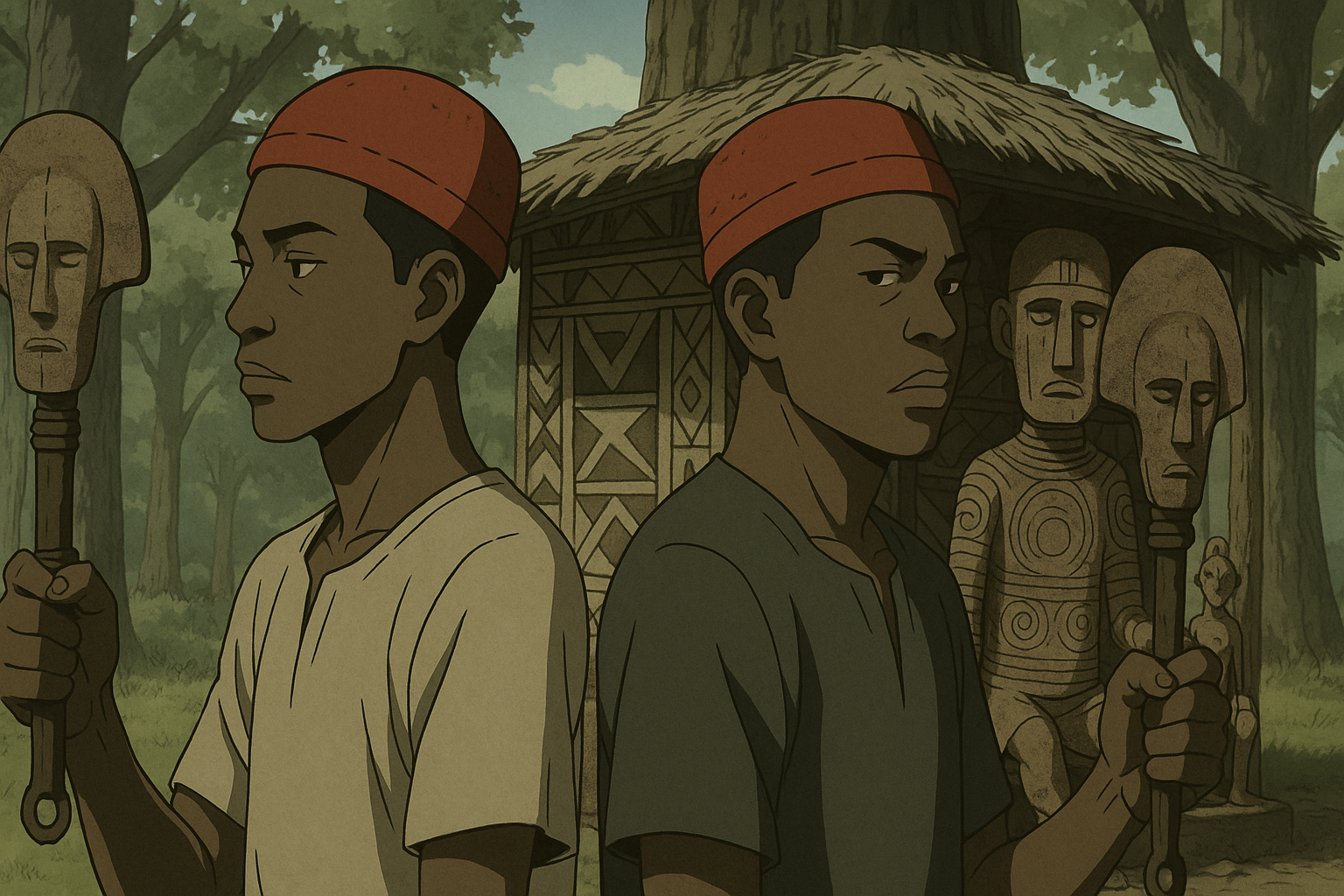
- Osu – People set apart for religious service to a shrine or deity
Unlike the Ohu, Osu were not enslaved by other humans. Their status came from spiritual roles. Some were born into Osu families, especially if their ancestors had strong ties to a particular shrine. Others chose to become Osu themselves, often in search of safety or spiritual protection.
In return, Osu took on sacred responsibilities. They cared for shrines, maintained rituals, and upheld spiritual laws on behalf of the wider community.
But I thought Igbo society was egalitarian?
Some people might find it confusing that traditional Igbo society had social categories, especially since it is often described as an egalitarian culture.
And in many ways, that description is accurate. Igbo communities were largely decentralised. Decisions were made through councils, and individuals could gain status through personal achievement or community service. However, like all societies, there were still roles, hierarchies, and responsibilities that shaped everyday life. Some groups handled trade, others maintained family and lineage ties, while some were responsible for religious or spiritual duties. Equality did not mean everyone lived the same way or held the same position.
It’s also important to remember that “Igbo” is not one single culture. It refers to a large group of communities with different customs and histories. Not every Igbo region practised the Osu system. It was most common in central Igbo areas and less prominent or non-existing along the cultural frontiers of Igboland where monarchy or non-Igbo influences were stronger like Arochukwu and Aniomaland.
Were the Osu really seen as “Inferior”?
A BBC article titled: Nigeria’s slave descendants prevented from marrying who they want, describes Osu as “prosperous but inferior.” But by framing it this way, the article misses the deeper context of the institution. While it’s true that the Osu were set apart from the wider community and excluded from certain civic roles, labelling them as inferior ignores the spiritual importance of their status. In traditional Igbo society, the Osu were set apart, not necessarily cast down or regarded as lesser. That distinction matters because groups who are cast down are usually seen as shameful or worthless. The Osu, on the other hand, played a vital role in upholding sacred responsibilities and maintaining spiritual order within the community.
“Worse than slavery”
The same article quotes Professor Ugo Nwokeji, who claims that Osu status is “worse than slavery.” This is a strong statement, but it reflects a narrow and misleading comparison. It treats slavery as a universal reference point for understanding the Osu, without acknowledging the specific cultural and spiritual meaning the institution held in traditional Igbo society.
In fact, descriptions from the slave trade period show that some people chose to become Osu to avoid being enslaved and sold. By dedicating themselves to a shrine, they came under spiritual protection. It was taboo to harm or sell someone marked as Osu, which gave them safety in a time when many others were being captured and exported. That reality challenges the idea that Osu status was somehow worse than slavery. If anything, it shows that for some, it offered refuge, not punishment.
What’s important to stress is that, yes, Osu lived apart from the Nwadiala and faced social restrictions, but they were not stripped of all agency or dignity. Many were able to build wealth, raise families, and live within their own communities.
Can Osu be fairly compared to India’s Dalit and “untouchable” castes?
The New Yorker article compares the Osu to India’s Dalits and Japan’s Burakumin, groups historically labelled “impure” because of their connection to so-called polluting labour. On the surface, the comparison may seem fair, but it misses some crucial differences.
Dalits were largely excluded from religious participation, denied access to sacred spaces, and socially locked into menial labour roles. Osu, on the other hand, held spiritual authority. They maintained sacred spaces, conducted vital rituals, and served as intermediaries between the community and its deities.
Equating Osu with hereditary labour castes that were seen as socially polluting reduces a spiritually significant institution to a stereotype of exclusion, and ignores the layered meanings that defined Osu status before colonial and Christian reinterpretations altered public perception.
Why the modern day stigma?
The demonisation of Osu status likely worsened during colonisation. Christian missionaries condemned traditional Igbo religion as idolatry, and those most closely connected to shrines, such as the Osu, were branded as spiritually impure, demonic or cursed. Over time, their role was reinterpreted through Christian ideas of sin, defilement and generational curses. Today, many still associate Osu status with taboo or spiritual danger.
Ironically, at the same time, the Church became one of the few avenues where Osu individuals could escape social exclusion as society began to change. As colonial rule introduced new routes to education, employment and influence, often tied to converting to Christianity, many Osu converted as a means of re-entering public life and adapting to the new social and economic landscape.
Our pick at the best explanation: The Medicine Shell
The Osu explainer video by Medicine Shell is easily one of the most thoughtful and well-researched takes on the subject out there. The creator takes time to unpack the topic using oral histories, cultural philosophy and comparisons across different traditions. He explores things like:
- The spiritual role Osu played in community life
- How shrine responsibilities often passed down through specific family lines
- The difference between those born into Osu status and those who became Osu to escape enslavement
- And how Osu were ritual figures with specific protections and responsibilities
What makes the video stand out is that it doesn’t try to sensationalise or oversimplify the issue. Instead, it gives the topic the care and nuance it deserves.
So why does this matter?
For many Igbo people, especially those in the diaspora, how the Osu are described affects more than just historical understanding. These narratives shape how we view our heritage, ourselves and each other.
The discrimination faced by Osu descendants today is real, but it should not define the origin or meaning of the institution itself. To understand Osu properly, we must look at the role it once played, why it existed, what it meant to those who practised it, and how it has been misunderstood through colonial and religious lenses.
Calling Osu “slaves” strips away the context of spiritual duty and community function. It replaces a culturally specific role with an outsider’s definition rooted in ownership and exploitation. This narrow framing obscures the deeper logic of Igbo social and religious life, reducing a complex tradition to a story of shame rather than one of responsibility, ritual and meaning.

One response to “Rethinking the Osu: Why “Osu = Slave” Is Misleading”
Sounds like monks to me. Great work dalu